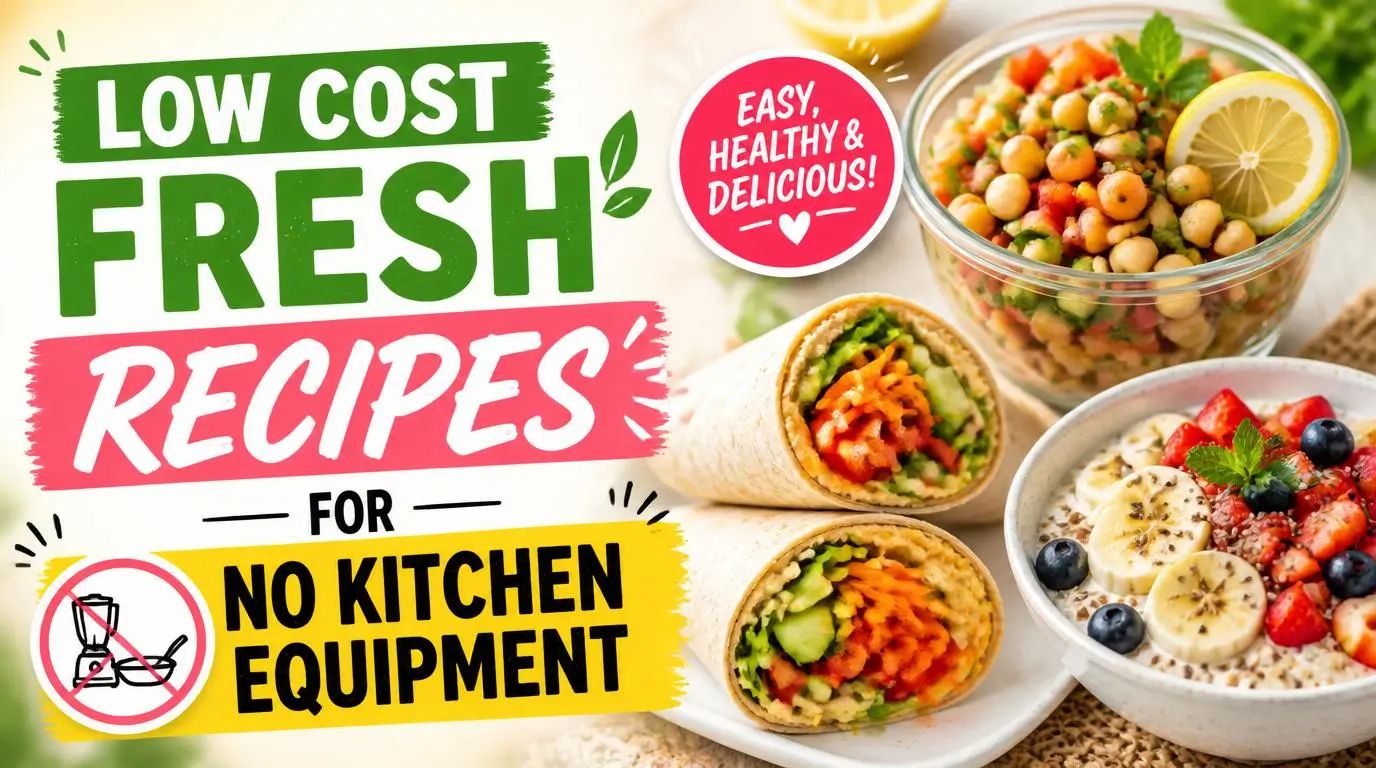
Low Cost Fresh Recipes for No Kitchen Equipment
A hot plate, a single dull knife, and a bowl that you also use as a plate. These low cost fresh recipes for no kitchen equipment were born out of a summer I spent in a sublet apartment with literally nothing to cook with, a situation I did not handle gracefully at first. But necessity pushed me toward meals that were genuinely creative, surprisingly satisfying, and cheap enough that I didn’t panic every time I opened my wallet at the grocery store.
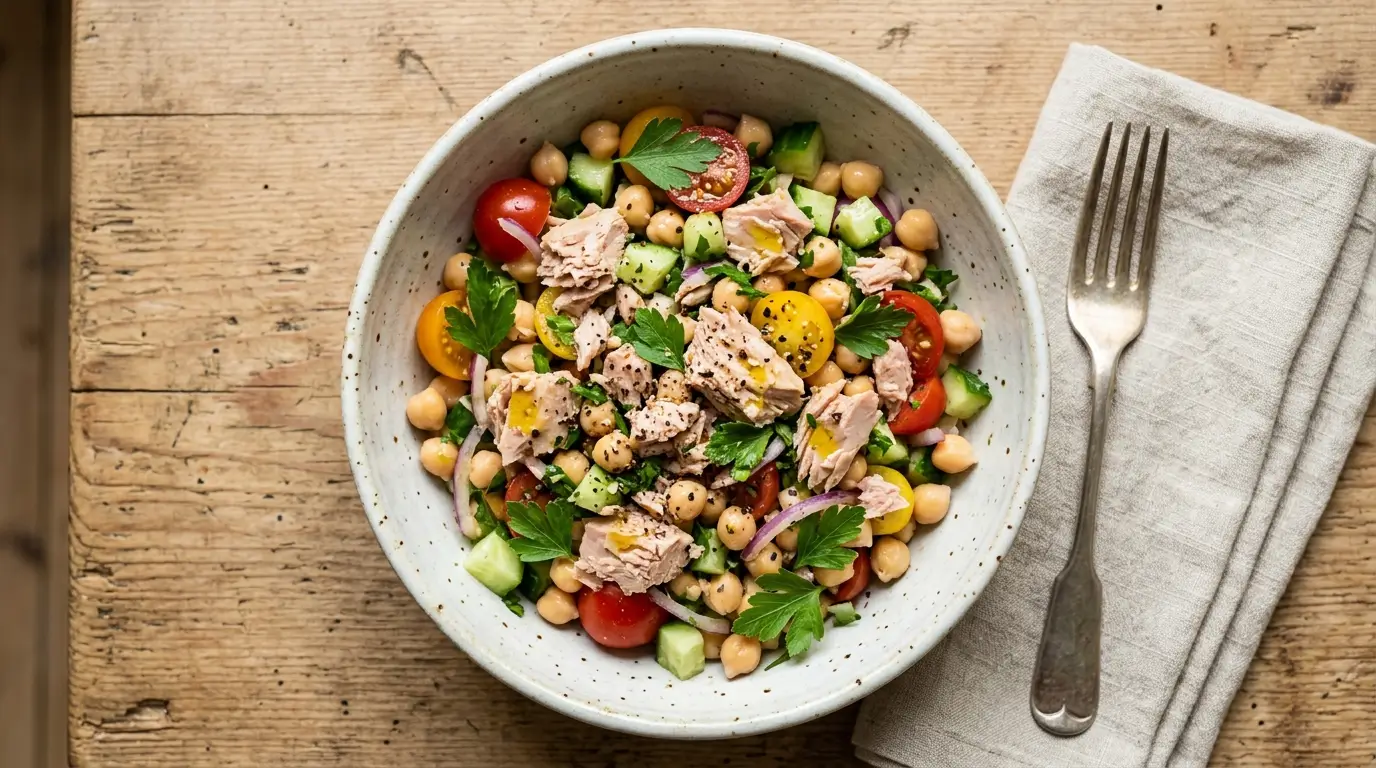
1. No-Cook Tuna and Chickpea Bowl
Canned tuna and canned chickpeas are two of the most nutritious, affordable ingredients you can buy, and combining them requires exactly zero cooking. Drain both cans, toss them together in a bowl with olive oil, lemon juice, salt, pepper, diced cucumber, and halved cherry tomatoes.
Add a handful of fresh parsley or a pinch of dried oregano if you have either on hand. The chickpeas add substance and the tuna adds protein, and the whole thing comes together in under five minutes. A fork is the only tool required. This is genuinely one of the best low cost fresh recipes for no kitchen equipment because it costs under $4 and keeps you full for hours.
2. Fresh Avocado and Bean Wrap
Wraps require no heat and no equipment beyond your hands and maybe a butter knife to spread things around. Lay a large flour tortilla flat, spread a layer of store-bought hummus across it, mash half a ripe avocado on top with a pinch of salt and lime juice, then add canned black beans (drained and rinsed), shredded lettuce, diced tomato, and a few shakes of hot sauce.
Roll it up tightly and eat immediately. Ripe avocado is the ingredient that makes this wrap feel genuinely satisfying rather than just functional. Grab avocados when they’re on sale at Aldi or Trader Joe’s and they cost almost nothing per serving.
3. Overnight Oats in a Jar
No stove, no microwave, no cooking at all. Overnight oats are made entirely in a container with a lid, prepared the night before, and eaten cold straight from the jar the next morning. Combine half a cup of rolled oats with half a cup of milk (dairy or plant-based), a spoonful of honey, and whatever fruit you have nearby.
Seal the container and refrigerate it overnight. The oats absorb the liquid and soften completely by morning. Top with fresh banana slices or berries before eating. A wide-mouth mason jar works perfectly and costs about $1 at most grocery stores. This is one of the most practical low cost fresh recipes for no kitchen equipment on this entire list.
4. Caprese Salad with Good Bread
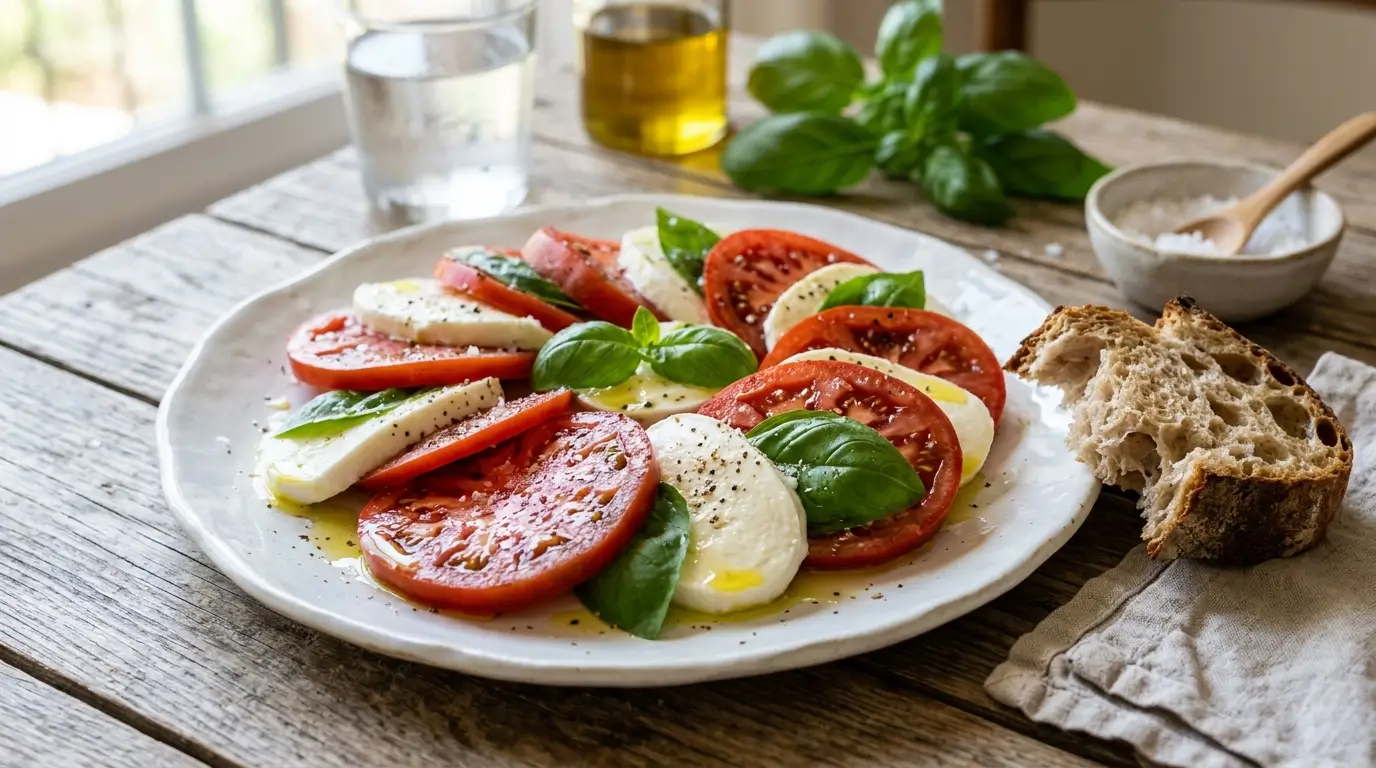
When tomatoes are in season, you barely need a recipe at all. Slice ripe tomatoes, layer them with fresh mozzarella, and tuck fresh basil leaves between each layer. Drizzle generously with olive oil and sprinkle with flaky salt and black pepper.
That’s it. No cooking, no equipment beyond a knife and a plate. Eat it with a good chunk of crusty bread from the bakery section of any grocery store. The bread soaks up the olive oil and tomato juice and makes the whole thing feel like a real meal. The quality of the tomatoes matters enormously here, so buy them from a farmers market when you can.
5. Cold Noodle Salad with Sesame Dressing
This one requires access to a kettle or a tap with hot enough water to soften rice noodles, which technically counts as the barest minimum of food preparation. Pour boiling or very hot water over rice vermicelli noodles in a bowl, cover with a plate, and let them sit for five to seven minutes until tender. Drain them in a colander or by carefully tipping the bowl.
Toss the noodles with a simple dressing of soy sauce, rice vinegar, a little sesame oil, and a pinch of sugar. Add shredded carrots, sliced cucumber, and fresh cilantro. Sesame oil is the ingredient that makes this taste distinctly intentional rather than improvised. One bottle lasts a long time and costs about $3.
6. Greek Yogurt with Honey and Fresh Fruit
Breakfast and snacks don’t need to be complicated to be genuinely good. A large tub of plain full-fat Greek yogurt from Fage or Chobani, topped with whatever fresh fruit is cheap and in season, drizzled with honey and finished with a sprinkle of granola if you have it, is a real meal.
Blueberries, sliced strawberries, diced peaches, and banana all work equally well. The protein in Greek yogurt is substantial enough to carry you through a few hours without hunger setting in. This costs about $2 per serving and takes under two minutes. No equipment required beyond a spoon.
7. Bread and Fresh Veggie Sandwiches
A good sandwich from quality ingredients is not a sad lunch. It’s actually one of the most underrated no-cook meals you can make. Start with good bread, a thick spread of hummus or cream cheese, then layer thinly sliced cucumber, tomato, red onion, fresh spinach or arugula, and sliced avocado.
Season with salt, pepper, and a squeeze of lemon. The combination of creamy, crunchy, and fresh makes this filling enough to count as a proper lunch. Use a butter knife to spread and layer and you need nothing else. This is exactly the kind of low cost fresh recipes for no kitchen equipment situation where buying good bread makes all the difference.
8. Mango and Black Bean Salsa Bowl
Ripe mango, canned black beans, red onion, jalapeño, cilantro, and lime juice come together into something that is technically a salsa but eats like a full meal when you add enough of it to a bowl of tortilla chips or serve it over pre-cooked microwavable rice.
Dice the mango small, drain and rinse the beans, dice the onion and jalapeño finely, and mix everything together with lime juice and salt. No cooking involved at all. The sweet-and-spicy combination is genuinely addictive. FYI, slightly underripe mangoes work just as well here and are usually cheaper at the store because fewer people grab them.
9. White Bean and Herb Smash on Toast
Canned white beans mashed with a fork and seasoned well taste remarkably similar to hummus and cost even less. Drain a can of cannellini beans and mash them in a bowl with a fork until mostly smooth. Mix in olive oil, lemon juice, a minced garlic clove (or garlic powder), salt, pepper, and fresh or dried rosemary.
Spread it thickly on toasted bread or crackers and top with sliced cherry tomatoes and a drizzle of olive oil. Cannellini beans have a naturally buttery, mild flavor that takes to seasoning very well and makes this feel far more sophisticated than a recipe with five ingredients has any right to be.
10. Fresh Fruit and Cheese Plate
Some of the most satisfying meals require nothing more than good ingredient selection and a plate. A handful of grapes, sliced apple or pear, a few crackers, a wedge of sharp cheddar or brie, and a small pile of olives arranged on a plate costs about $5 and requires zero preparation beyond opening packaging.
This works as lunch, a light dinner, or a snack that feels genuinely special. Good cheese and fresh seasonal fruit together hit every flavor note you need: sweet, salty, creamy, and crisp all at once. Trader Joe’s and Aldi both carry affordable cheese options that taste far better than their price suggests.
Why Low Cost Fresh Recipes for No Kitchen Equipment Work Better Than You’d Expect
The assumption most people carry around is that real food requires real equipment. A stove, a set of pans, a working oven. But a significant chunk of the most nutritious and satisfying meals humans eat around the world require nothing of the sort.
Mediterranean food leans heavily on raw vegetables, olive oil, and bread. Southeast Asian cuisine uses room-temperature noodles and fresh herbs. Middle Eastern food builds entire meals around dips, flatbreads, and raw salads. The no-equipment approach isn’t a compromise, it’s actually a different cooking tradition with its own logic and flavor.
Every recipe on this list costs between $2 and $6 per serving. None of them require anything beyond a fork, a knife, and a bowl. And all of them taste like something you chose to eat because you wanted it, not because you had no other option. That combination, low cost, fresh ingredients, and zero equipment dependency, is genuinely useful in a lot of life situations: dorm rooms, temporary housing, camping trips, office lunches, and budget-tight months where takeout just isn’t happening.
IMO, the real value of knowing these recipes isn’t just for emergencies. It’s having a reliable set of meals you can make anywhere, anytime, with almost nothing on hand.
FAQs
What are the best low cost fresh recipes for no kitchen equipment for college students?
Overnight oats, tuna and chickpea bowls, and bean wraps are the strongest options for dorm or off-campus living. They need no heat, cost very little, and provide enough protein and fiber to actually sustain you through long study days. All three work well with ingredients from any basic grocery store.
Can I eat nutritiously without any cooking equipment at all?
Yes, completely. Canned beans, tuna, Greek yogurt, eggs from a shared kitchen microwave, fresh fruit, whole grain bread, avocado, and raw vegetables cover all the main nutritional bases. The key is combining protein, healthy fat, and fiber in each meal, which these recipes do without any cooking required.
What’s the absolute cheapest meal on this list per serving?
The white bean smash on toast comes in at around $2 per serving when you buy store-brand cannellini beans and basic bread. The overnight oats are similarly priced. Both are genuinely filling and nutritious, which makes them strong options when the grocery budget is very tight for a stretch of time.
How do I keep fresh ingredients from going to waste without a fridge?
Buy only what you’ll use within a day or two and shop more frequently in small amounts. Bananas, apples, pears, avocados, tomatoes, and bread all store well at room temperature for several days. Canned and dry goods have long shelf lives and don’t need refrigeration at all, making them ideal pantry anchors.
Are these recipes filling enough to replace a full meal?
Most of them are, especially when you combine protein and fat together in the same dish. The tuna and chickpea bowl, the bean wrap, the cold noodle salad, and the white bean toast all contain enough substance to serve as a proper lunch or dinner. The fruit and yogurt options work best as breakfast or a light meal.
Conclusion
Eating well without a proper kitchen setup is absolutely doable, and once you build a short list of reliable no-equipment meals, it stops feeling like a limitation and starts feeling like a practical skill. These recipes have gotten me through temporary living situations, budget crunches, and more than a few very bare kitchens. Which one are you trying first?