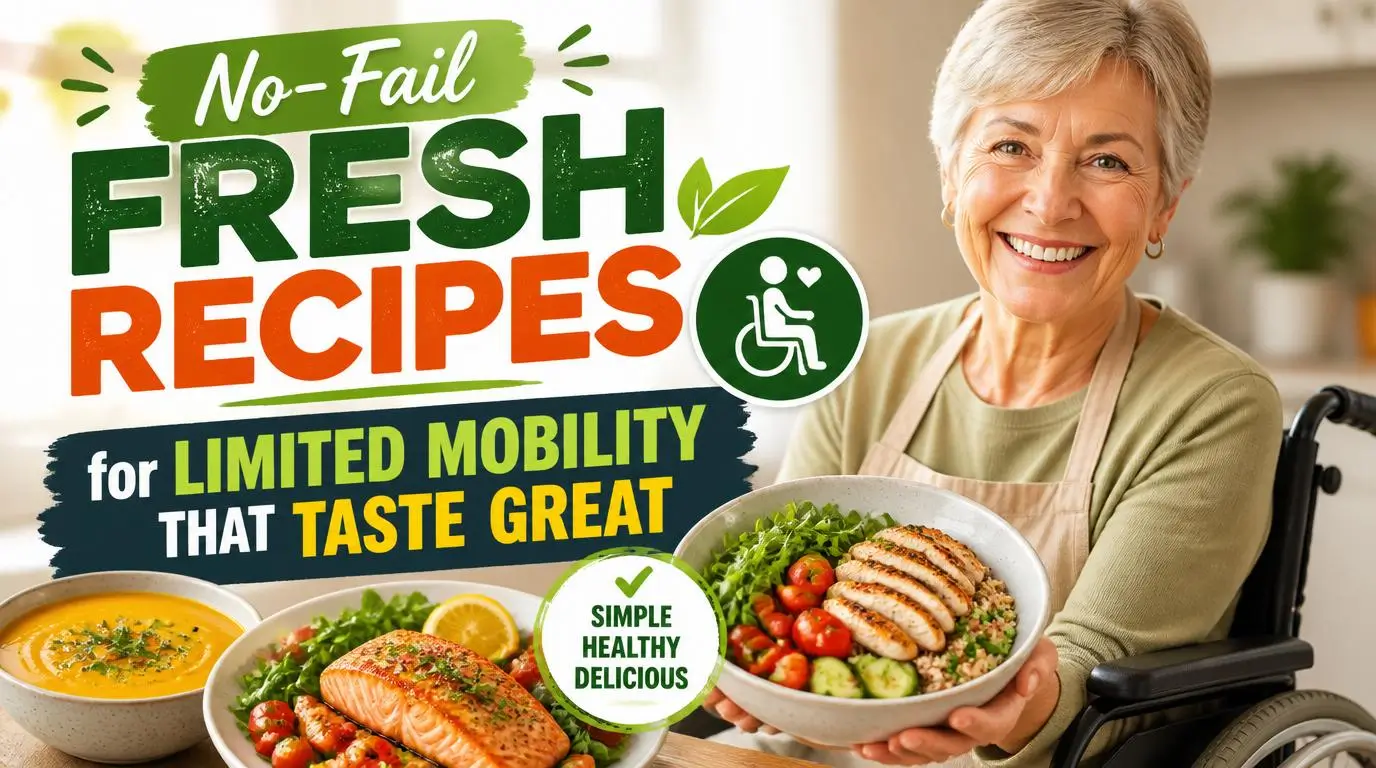
No-Fail Fresh Recipes for Limited Mobility That Taste Great
Cooking with a body that doesn’t cooperate the way it used to is genuinely hard, and most recipe sites don’t acknowledge that. These no-fail fresh recipes for limited mobility come from real experience watching my mother-in-law rebuild her kitchen confidence after a hip replacement, finding meals that required minimal standing, minimal grip strength, and minimal complicated steps. What we found together changed how both of us think about cooking. Accessible doesn’t have to mean boring. Not even a little.
1. Slow Cooker Chicken and Vegetable Soup
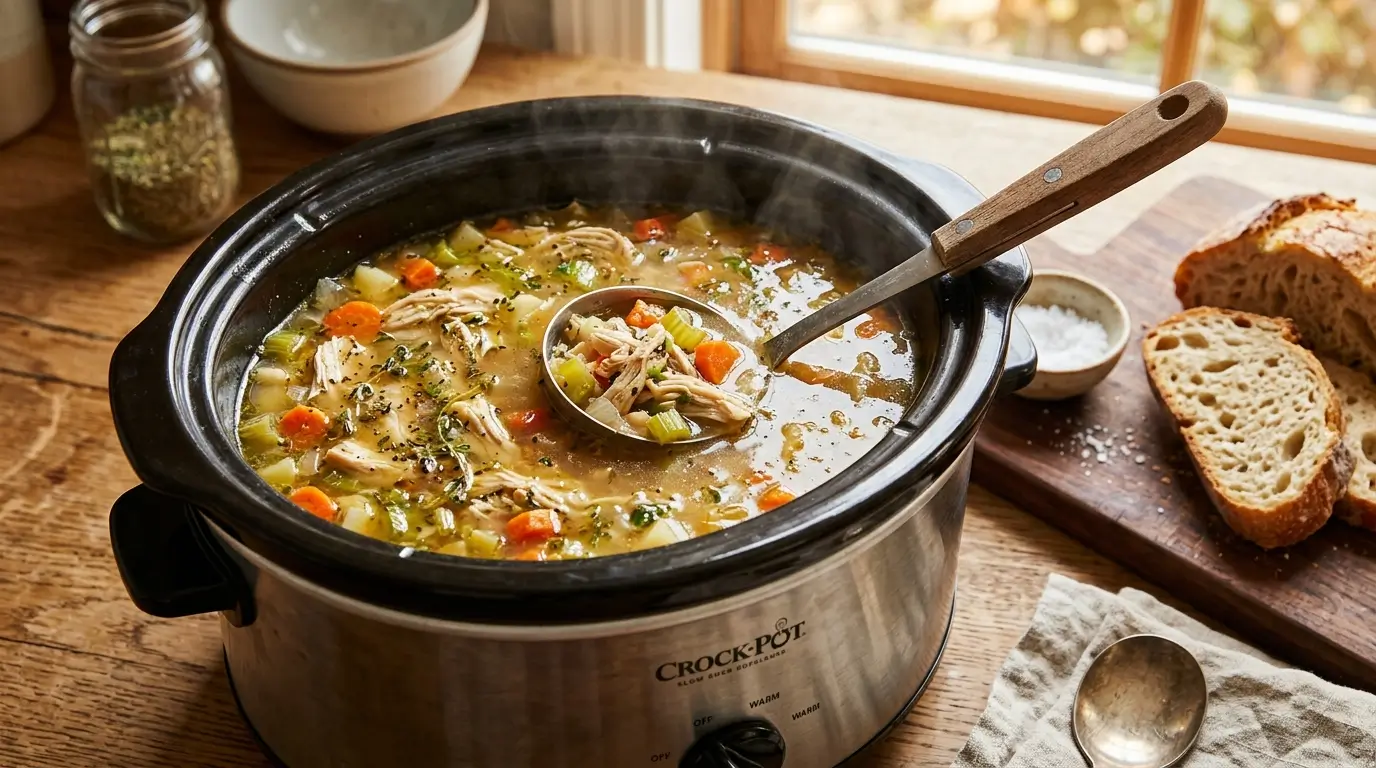
The slow cooker is the single most useful tool in a limited-mobility kitchen because it does almost everything for you after a very short setup. Place chicken thighs directly into the pot, add diced carrots, celery, and onion (all pre-cut bags from the grocery store work perfectly here), pour in chicken broth, and season with salt, pepper, garlic powder, and dried thyme.
Set it on low for seven to eight hours and walk away completely. The chicken becomes tender enough to shred with two forks right in the pot, no draining, no transfers, no heavy lifting. Pre-cut vegetable bags from stores like Trader Joe’s or Kroger are a genuine lifesaver here and cost only a dollar or two more than whole vegetables. Serve straight from the pot with bread on the side.
2. Microwave Scrambled Eggs
Standing at a stove for ten minutes when your legs or back hurt is a real barrier, and microwave eggs solve that entirely. Crack two or three eggs into a microwave-safe mug or bowl, add a splash of milk, salt, and pepper, and whisk with a fork. Microwave on high for 30 seconds, stir, then microwave for another 20 to 30 seconds until just set.
They come out soft, fluffy, and perfectly cooked every time. Add shredded cheese, diced tomatoes, or a spoonful of salsa on top while they’re still warm. This takes less than two minutes from start to finish, requires no pans, and produces zero dishes except for one mug. That matters enormously on difficult mornings.
3. Sheet Pan Salmon with Pre-Cut Vegetables
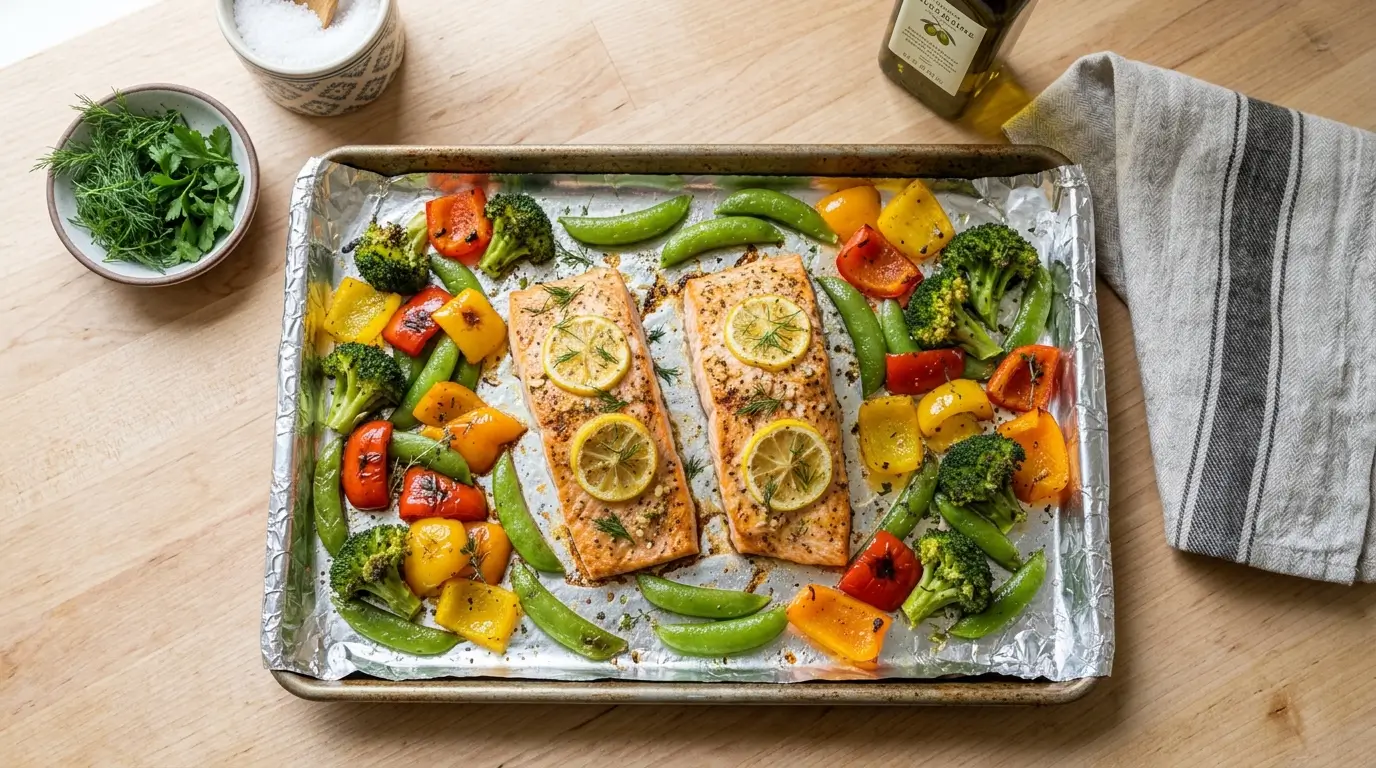
Sheet pan cooking is genuinely one of the best formats for no-fail fresh recipes for limited mobility because everything goes into one pan and the oven handles the cooking without any supervision. Line a baking sheet with foil first, which eliminates scrubbing later. Place salmon fillets in the center, season with olive oil, lemon juice, garlic powder, salt, and pepper.
Surround the salmon with a bag of pre-cut stir-fry vegetables or broccoli florets tossed in the same seasonings. Roast at 400°F for 18 to 20 minutes. The foil lining means cleanup is literally peeling and tossing one sheet. No scrubbing, no heavy pot to drain, and the meal itself is genuinely fresh and nutritious.
4. No-Cook Tuna and White Bean Salad
Some of the best meals require no heat at all. Open a can of tuna and a can of white beans, drain both, and combine them in a bowl with diced cucumber, halved cherry tomatoes, a drizzle of olive oil, lemon juice, salt, pepper, and fresh parsley if you have it.
Mix it together with a fork and eat it as is or scoop it onto crackers or toasted bread. This takes about four minutes, involves no stove, no oven, and no standing for extended periods. The protein from both the tuna and beans makes it genuinely filling, not just a light snack. I keep canned tuna and white beans stocked at all times specifically for days when cooking feels out of reach.
5. Instant Pot Lentil Soup
Electric pressure cookers like the Instant Pot require minimal standing time and handle long-cooking ingredients like lentils in a fraction of the usual time. Add rinsed red lentils, diced canned tomatoes, vegetable broth, diced onion, garlic, cumin, coriander, smoked paprika, and salt to the pot. Lock the lid, set to high pressure for 12 minutes, and let it naturally release for ten minutes.
Red lentils break down into a thick, creamy soup completely on their own with no blending required. The Instant Pot Duo 6-quart is the model I’d recommend for this purpose specifically because the inner pot is lighter than some competitors, which matters when lifting is difficult. The soup keeps in the fridge for five days and reheats in two minutes.
6. Greek Yogurt Bowl with Fresh Fruit and Honey
Breakfast doesn’t always need to involve any cooking at all, and this bowl proves that effortlessly. Spoon a generous amount of full-fat Greek yogurt into a bowl, top it with whatever fresh fruit is easy to eat without much cutting, like blueberries, raspberries, sliced strawberries, or grapes, and drizzle honey over the top.
Add granola if you want a little crunch. That’s genuinely the entire recipe. It takes two minutes, involves zero heat, and delivers real protein, fresh fruit, and enough substance to carry you through a few hours. FYI, Fage or Chobani plain Greek yogurt have the thickest texture and the best protein content for keeping hunger away.
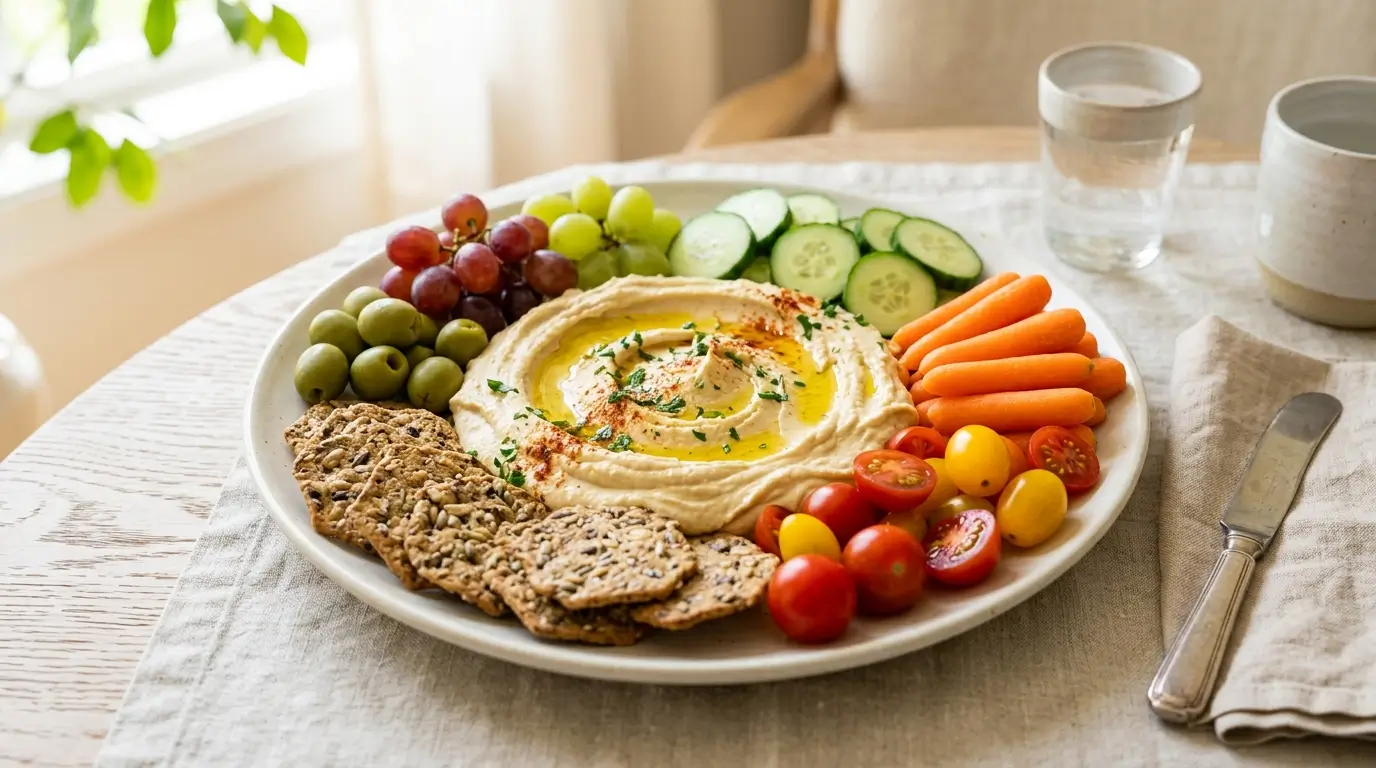
7. Hummus and Veggie Snack Plate
On high-pain or low-energy days, a proper snack plate can serve as a real meal without any cooking required. Spoon store-bought hummus into the center of a plate or shallow bowl, then arrange sliced cucumber, baby carrots, cherry tomatoes, and whole grain crackers around it.
Add sliced cheese, a handful of grapes, or some olives to round it out. Everything here requires minimal grip and minimal prep, especially if you buy pre-sliced vegetables. This is one of those no-fail fresh recipes for limited mobility that takes four minutes to put together and genuinely satisfies. Sabra and Hope both make excellent ready-to-use hummus that requires no prep at all.
8. Overnight Oats
Preparing breakfast the night before removes all the morning effort entirely, which makes overnight oats one of the most practical options in this category. Combine half a cup of rolled oats with half a cup of milk, a spoonful of Greek yogurt, a drizzle of honey, and any mix-ins you like into a jar or container with a lid. Shake or stir, then refrigerate overnight.
In the morning, breakfast is completely ready and requires nothing but opening the fridge. Add fresh berries, sliced banana, or a spoonful of peanut butter on top before eating. No heating, no cooking, no standing. The oats soften overnight and the texture is creamy and filling. Wide-mouth mason jars make them easy to eat directly without transferring.
9. Rotisserie Chicken Tacos
Rotisserie chicken from any grocery store deli section is one of the best tools for cooking with limited mobility because the hardest part, the cooking, is already done. Pull the chicken apart by hand while it’s still slightly warm, which requires very little grip strength, and warm the shredded meat for two minutes in the microwave.
Lay it into small soft corn or flour tortillas and add whatever toppings require no prep: pre-shredded cheese, store-bought salsa, sour cream, and pre-cut pico de gallo from the refrigerated section of the produce aisle. A full dinner comes together in about eight minutes. The chicken also works in bowls over rice or in a simple salad for the next day.
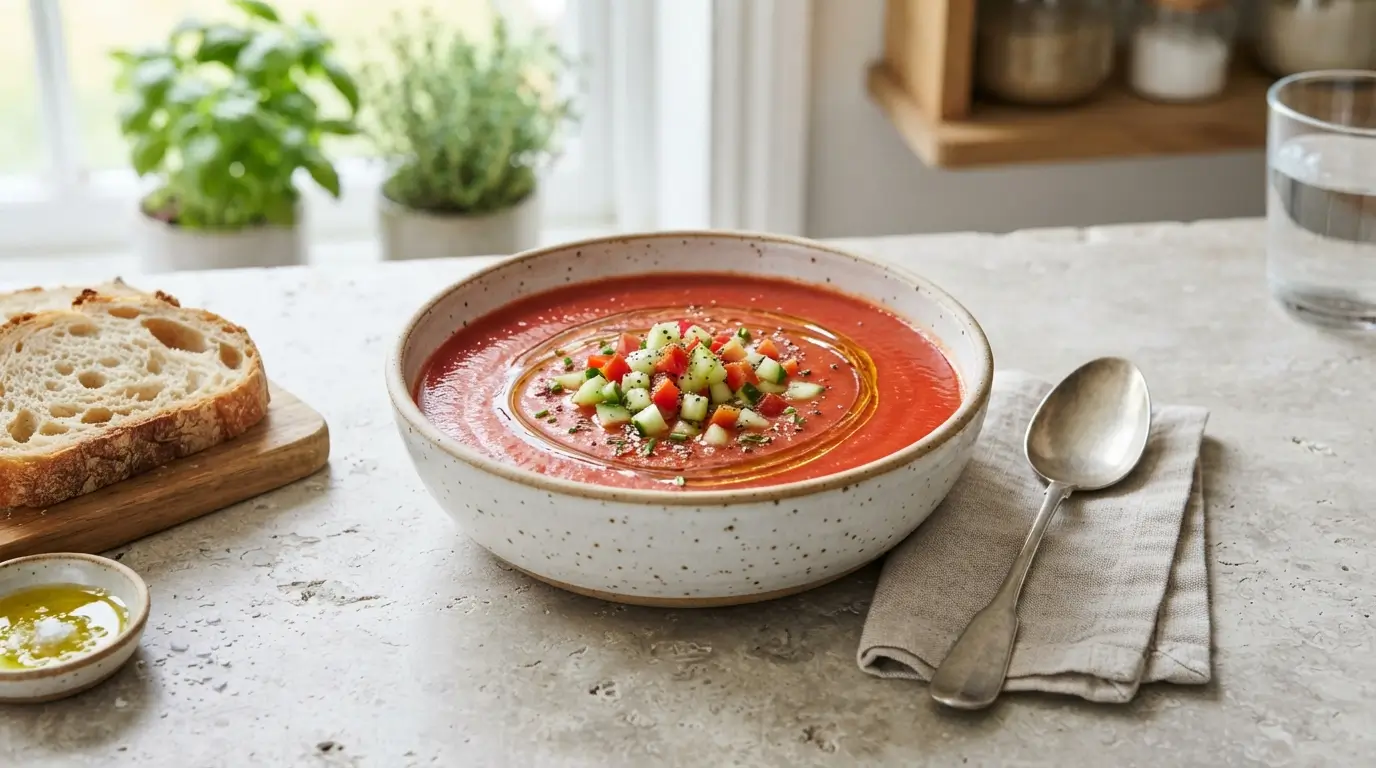
10. Blended Tomato Gazpacho
Cold soup sounds like a niche thing until you realize it requires no cooking whatsoever and takes about five minutes to make with a blender. Combine ripe tomatoes, cucumber, half a red bell pepper, a clove of garlic, olive oil, red wine vinegar, salt, and a little water in a blender. Blend until smooth and refrigerate for at least 30 minutes before serving.
A lightweight immersion blender like the Braun MultiQuick 5 works well here because you can blend directly in a bowl or deep cup rather than lifting a heavy blender pitcher. Gazpacho keeps in the fridge for three days and tastes better as it sits. Serve it cold with crusty bread or crackers on the side.
Why These Recipes Work for Limited Mobility Kitchens
The thing most cooking resources miss is that limited mobility isn’t just one thing. It might mean chronic pain, arthritis in the hands, difficulty standing for long periods, reduced grip strength, post-surgical recovery, or a combination of several of these at once. A recipe that works for one person’s situation might not work for another’s, so having a range of options matters.
Every recipe on this list was chosen with specific physical considerations in mind: minimal standing time, low grip requirements, no heavy lifting, and short active cooking windows. Most use pre-prepped or shelf-stable ingredients to reduce the barrier even further. And all of them produce meals that taste genuinely good, because eating well is worth protecting regardless of what physical challenges you’re working around.
IMO, the best kitchen setup for limited mobility also includes a few key tools beyond just the recipes themselves. A sturdy stool at counter height, a jar opener with a wide handle, an electric can opener, and a lightweight cutting board with non-slip feet make every one of these recipes even more manageable.
FAQs
What kitchen tools help the most with no-fail fresh recipes for limited mobility?
A slow cooker, Instant Pot, microwave, and electric can opener cover the most ground. Add a lightweight immersion blender and a non-slip cutting board and you can handle nearly every recipe here without straining your hands, wrists, or back. Silicone-grip utensils also help significantly for anyone with reduced hand strength.
Can I make these recipes if I can only stand for a few minutes at a time?
Yes, most of them are designed for exactly that situation. The microwave eggs, tuna salad, hummus plate, and overnight oats require almost no standing at all. The slow cooker and sheet pan recipes need a few minutes of setup but then run completely unattended. A kitchen stool makes even the standing portions manageable.
Are these recipes nutritionally balanced or are they just easy?
Both, actually. The recipes include lean protein from salmon, chicken, tuna, eggs, and lentils, plus fresh vegetables and fiber from beans and oats throughout. None of them rely on heavily processed convenience foods. They use real ingredients in simple combinations that happen to also be genuinely nourishing.
How do I reduce grip strain when opening cans and jars?
An electric can opener like the Hamilton Beach Smooth Touch removes the twisting motion entirely. For jars, a rubber jar opener pad or a countertop jar opener grips for you. Pre-drained and packaged ingredients like pouched tuna or tetra-pack broth also remove the can-opening step altogether on difficult days.
What’s the easiest recipe on this list for a really difficult day?
The microwave scrambled eggs or the hummus and veggie plate require the absolute least effort. Both take under five minutes, involve no heat management, and produce almost nothing to clean up afterward. On the hardest days, either of those two is a completely solid, nutritious option that requires very little from your body.
Conclusion
Cooking well with limited mobility is completely possible when you have the right recipes working with your body instead of against it. Every single meal on this list came from real trial and real need, not from a theoretical idea of what accessible cooking should look like. Which one of these feels most useful for where you are right now?